
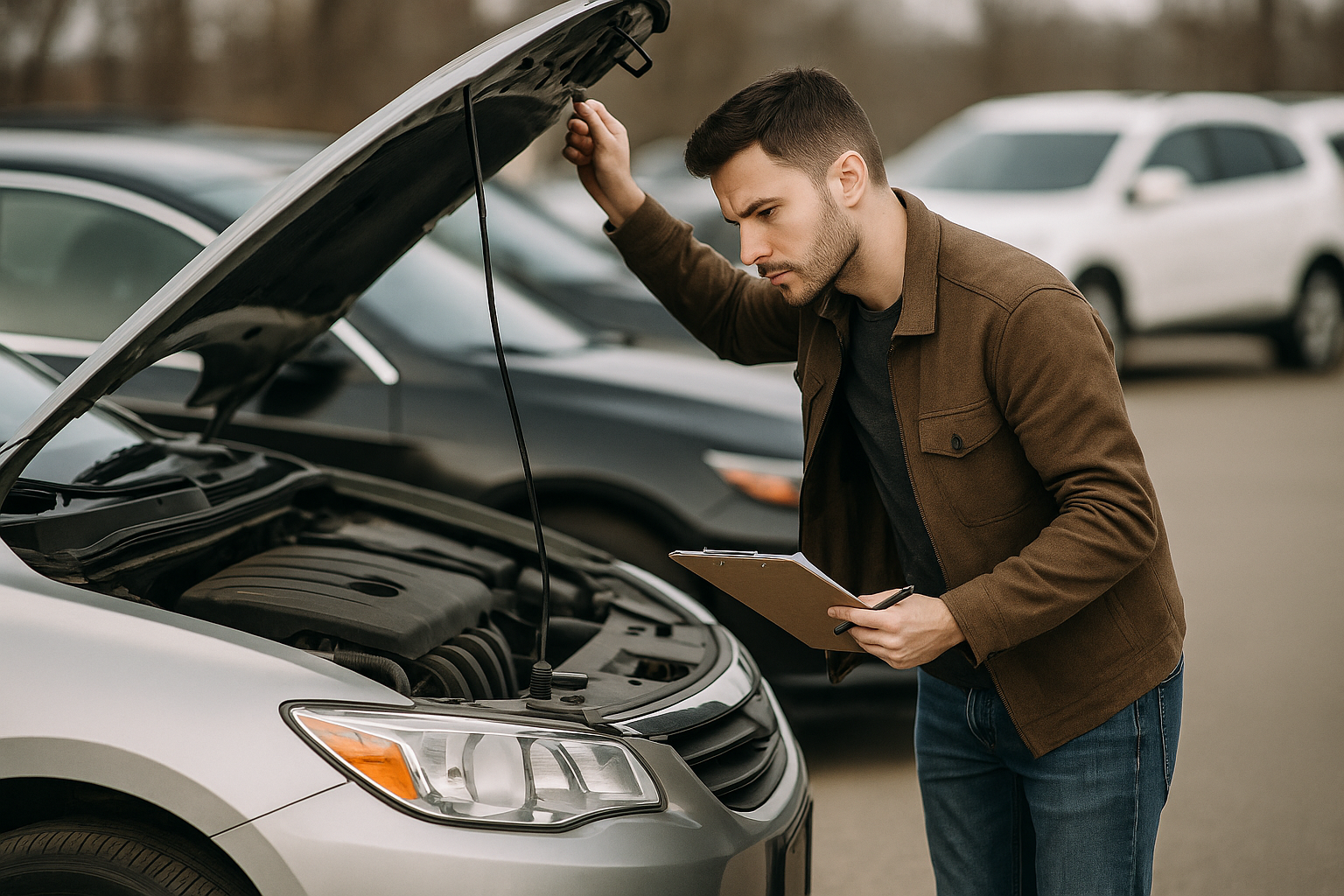
Used Car Inspection Checklist for First-Time Buyers: What to Check Before You Buy
Buying your first used car is exciting, but it can also be intimidating. A vehicle may look spotless in photos and drive well during a short test drive while still hiding problems that could cost thousands of dollars later. The good news is that you don't need to be a mechanic to spot many warning signs — you just need to know where to look. This checklist walks you through what to examine, what questions to ask, and when it might be smarter to walk away.
Buying your first used car is exciting, but it can also be intimidating. A vehicle may look spotless in photos and drive well during a short test drive while still hiding problems that could cost thousands of dollars later.
The good news is that you don't need to be a mechanic to spot many warning signs.
Whether you're buying from a dealership or a private seller, this used car inspection checklist will help you know what to look for, what questions to ask, and when it's better to walk away.
1. Start With the Vehicle's History
Before getting too excited about a car, learn as much as possible about its history.
Ask for the Vehicle Identification Number (VIN) and review the vehicle history report where available.
Look for:
Previous accidents or collision claims
Insurance damage records
Registration history
Number of previous owners
Odometer records
Service and maintenance history
Whether the vehicle has ever been branded rebuilt, salvage, or irreparable
Outstanding recalls
An accident in a vehicle's history doesn't automatically make it a bad purchase. What matters is the severity of the damage, how it was repaired, and whether the price appropriately reflects the vehicle's history.
First-time buyer tip: Compare the mileage shown on the dashboard with the mileage reported throughout the vehicle's history. Large unexplained inconsistencies deserve further investigation.
2. Inspect the Exterior in Daylight
Whenever possible, inspect a used vehicle outdoors during daylight. Poor lighting can make scratches, dents, rust, paint differences, and previous body repairs much harder to notice.
Walk slowly around the entire vehicle.
Check for:
Dents and deep scratches
Rust or corrosion
Cracked lights
Damaged bumpers
Windshield chips or cracks
Missing trim
Uneven gaps between body panels
Paint that appears slightly different between panels
Pay particular attention to the hood, doors, fenders, trunk, and bumpers.
Uneven panel gaps or noticeably different paint shades don't necessarily mean you should reject the car, but they can indicate previous bodywork and are worth asking about.
3. Look Closely at the Tires
Don't overlook the tires. Replacing four tires shortly after purchasing a vehicle can quickly increase your real cost of ownership.
Check all four tires for:
Adequate tread depth
Cracks or sidewall damage
Bulges
Uneven wear
Different tire sizes
Excessive age
Mismatched tires
Uneven tire wear can sometimes indicate alignment, suspension, or steering problems.
Also check whether the vehicle has a spare tire or tire repair kit and whether the required jack and tools are present.
4. Check Under the Vehicle
You don't need to crawl underneath the car, but take a look from several angles.
Watch for obvious fluid leaks, hanging components, damaged panels, or significant corrosion.
A few drops of clear water underneath a vehicle after the air conditioning has been running can be normal condensation. Oil, coolant, transmission fluid, or other unexplained fluids deserve closer attention.
5. Inspect Under the Hood
If you aren't mechanically inclined, you can still perform a basic visual inspection.
With the engine off, look for:
Oil or fluid leaks
Loose or damaged components
Corroded battery terminals
Cracked hoses
Damaged belts
Signs of makeshift repairs
Unusual smells
Check the engine oil if you're comfortable doing so. Extremely low oil levels or oil that appears contaminated can warrant further investigation.
The engine bay doesn't need to look brand new. In fact, an unusually freshly washed engine compartment on an older vehicle may justify asking why it was cleaned.
6. Inspect the Interior
The condition of the interior can tell you a surprising amount about how a vehicle has been treated.
Check:
Seats and upholstery
Seat adjustments
Seat belts
Dashboard
Cupholders and storage compartments
Headliner
Carpets and floor mats
Door handles and locks
Trunk or cargo area
Pay attention to unusual dampness or musty smells. Water intrusion can lead to electrical problems, mould, and expensive repairs.
Also compare interior wear with the claimed mileage. Heavy wear on the steering wheel, pedals, or driver's seat on an unusually low-mileage vehicle may justify additional questions.
7. Test Every Electrical Feature
Electrical problems are easy to miss when you're focused on how the car drives.
Before leaving for the test drive, test as many features as possible.
That includes:
Headlights
Brake lights
Turn signals
Hazard lights
Power windows
Power locks
Mirrors
Windshield wipers
Washer fluid
Horn
Infotainment system
Bluetooth
Backup camera
Heated seats, if equipped
Sunroof, if equipped
Air conditioning
Heating
A small electrical issue may seem insignificant during the purchase, but multiple problems can become expensive and frustrating.
8. Pay Attention When Starting the Engine
Ideally, ask to see the vehicle when the engine is cold rather than after the seller has already warmed it up.
Turn the ignition on and watch the dashboard.
Warning lights normally illuminate briefly when the vehicle starts and then turn off. Pay attention if the check-engine, ABS, airbag, oil-pressure, battery, or other warning lights remain illuminated.
Listen for unusual:
Knocking
Ticking
Grinding
Squealing
Excessive vibration
If something sounds wrong, don't assume it is minor without having it properly diagnosed.
9. Take a Proper Test Drive
Never buy a used vehicle based only on its appearance.
A useful test drive should include more than driving around a parking lot.
Where safe and practical, test the vehicle during:
Low-speed driving
Normal city driving
Acceleration
Braking
Turning
Parking
Reverse
Highway-speed driving
Pay attention to how the car behaves.
Does it accelerate smoothly?
Does the transmission shift properly?
Does the steering wheel vibrate?
Does the vehicle pull noticeably to one side?
Do you hear clunks when driving over bumps?
Does the steering feel unusually loose?
Do the brakes stop the vehicle smoothly without excessive vibration?
Turn the radio down during part of the drive so you can actually listen to the vehicle.
10. Test the Transmission
Transmission repairs can be expensive, so pay close attention to how the vehicle shifts.
For an automatic transmission, watch for:
Delayed engagement when selecting Drive or Reverse
Harsh shifting
Slipping
Jerking
Unusual noises
For a manual transmission, pay attention to clutch operation, gear engagement, and unusual grinding.
Any concern should be investigated before purchasing.
11. Check the Brakes and Suspension
During your test drive, pay attention to braking and ride quality.
Potential warning signs include:
Steering-wheel vibration while braking
Grinding noises
Squealing
Excessive bouncing
Clunking over bumps
Vehicle pulling while braking
Unusually soft or hard brake pedal
Some issues may simply indicate normal wear items that need replacement, but you should know about those costs before agreeing to a purchase price.
12. Scan the Vehicle for Trouble Codes
A diagnostic scan can provide additional information about the vehicle's electronic systems.
However, don't assume that a dashboard with no warning lights automatically means there are no problems.
A proper inspection can identify stored or pending diagnostic trouble codes and help determine whether additional investigation is necessary.
For modern vehicles with increasingly complex electronics, this step can be particularly valuable.
13. Verify the Mileage and VIN
Make sure the VIN on the vehicle matches the documentation.
VIN locations commonly include the lower windshield area and driver's door jamb.
The VIN should correspond with the ownership and vehicle history documentation.
Also verify the odometer reading.
Never rely exclusively on what appears in an advertisement.
14. Research the Model Before Buying
A vehicle can be mechanically sound today but still be a poor choice if that particular model has a history of expensive problems.
Before buying, research the specific:
Year + Make + Model + Engine + Transmission
Look for information about:
Common mechanical problems
Recalls
Reliability
Maintenance costs
Fuel consumption
Parts availability
Insurance costs
Known engine or transmission issues
Two vehicles that cost the same to purchase can have dramatically different long-term ownership costs.
15. Calculate the Real Cost of the Car
Your budget shouldn't stop at the advertised price.
Consider the potential cost of:
Taxes
Licensing and registration
Insurance
Financing
Tires
Brakes
Immediate maintenance
Future repairs
Fuel
Scheduled maintenance
For example, a cheaper vehicle requiring tires, brakes, suspension work, and immediate servicing could ultimately cost more than a slightly more expensive vehicle that's already properly reconditioned.
Focus on total value, not simply the lowest purchase price.
16. Get an Independent Pre-Purchase Inspection
For most first-time buyers, this is one of the most valuable steps in the entire buying process.
If you're uncertain about a vehicle's mechanical condition, arrange a pre-purchase inspection with a qualified, independent mechanic.
A professional inspection can uncover problems you may not notice during a test drive, including issues involving the:
Engine
Transmission
Suspension
Steering
Braking system
Exhaust
Undercarriage
Fluid leaks
Electrical systems
Spending a little money before purchasing could help you avoid spending significantly more afterward.
Red Flags That Should Make You Slow Down
Not every problem means you should immediately reject a vehicle. However, first-time buyers should be cautious when they encounter several warning signs together.
Watch for unexplained warning lights, major fluid leaks, suspicious mileage inconsistencies, severe rust, rough transmission behaviour, overheating, strong burning smells, significant structural damage, missing documentation, or a seller who refuses to allow a reasonable inspection.
And be especially cautious when you're being pressured to make an immediate decision.
A good deal should still make sense after you've inspected the vehicle.
The 60-Second Used Car Checklist
Before saying yes, ask yourself:
☐ Did I check the vehicle history?
☐ Does the VIN match the documents?
☐ Did I inspect the body and paint?
☐ Are the tires in good condition?
☐ Did I look underneath for obvious leaks or damage?
☐ Did I inspect the engine compartment?
☐ Did I test the lights, windows, locks and electronics?
☐ Did I check the heating and air conditioning?
☐ Are there any warning lights?
☐ Did I take a proper test drive?
☐ Did I test the brakes and steering?
☐ Does the transmission operate smoothly?
☐ Did I research common problems for this exact model?
☐ Do I understand the total cost of buying and owning it?
☐ If I have concerns, has a qualified mechanic inspected it?
If you can't confidently answer these questions, don't rush the purchase.
Final Thoughts: Buy the Car You Understand
For a first-time buyer, the biggest mistake isn't necessarily choosing an older car or a higher-mileage car. It's buying a vehicle without understanding its condition.
A well-maintained used vehicle with documented history can sometimes be a much better purchase than a newer vehicle that has been neglected.
Inspect the car carefully. Review its history. Take a proper test drive. Research the model. Ask questions. And when you're uncertain, get an independent professional inspection.
The goal isn't simply to find a car that looks good today.
It's to find a vehicle you'll still feel good about owning months and years after you drive it home.
Shop Inventory
Find Your Next Vehicle